
Secret Vault Bet: Digital Assets Or Investment Mirage?
— 7 min read
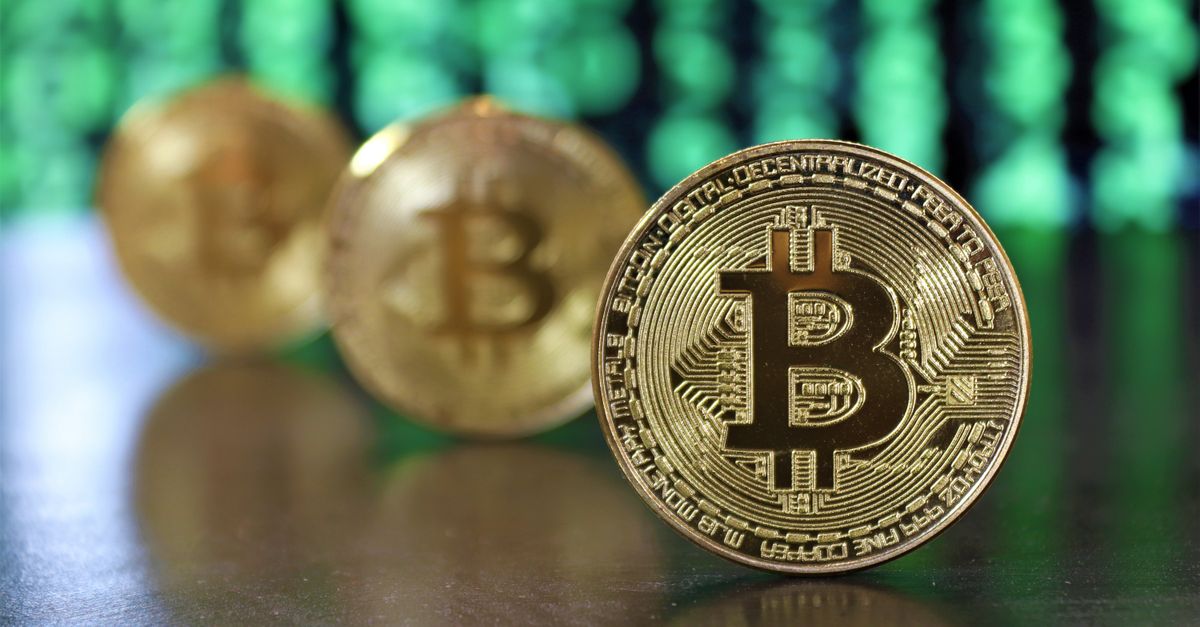
58% of crypto holders still keep their coins on exchange platforms, yet ownership only starts when you hold the private keys yourself. In practice that means the difference between a loan to a third party and a provable, on-chain claim to value.
Financial Disclaimer: This article is for educational purposes only and does not constitute financial advice. Consult a licensed financial advisor before making investment decisions.
Blockchain Promise: Ownership, Not Just Access
When I first advised a client on blockchain adoption, the most common misconception was that a positive balance on an exchange equaled legal title. The technology behind Bitcoin and Ethereum is built on cryptographic proofs: a private key is the only mechanism that can generate a valid signature to move funds. Without that signature, the ledger will reject any transaction, regardless of how many tokens sit under a user’s name on a centralized dashboard.
A self-custodial wallet - also called a non-custodial wallet - places those private keys directly in the hands of the owner. I have seen this distinction turn a speculative position into a genuine asset class because the holder can verify ownership independently of any intermediary. The initial appeal of a public distributed ledger is its transparency; every transaction is visible, but only the holder of the matching private key can unlock the value. That hidden layer of cryptography is the skill set that separates an investor from a debtor.
Decentralized finance (DeFi) markets tout peer-to-peer interaction without rent-seeking middlemen. In reality, the cost of that promise is the personal responsibility each participant must shoulder. When I calculate ROI on a DeFi protocol, I always factor in the opportunity cost of time spent managing keys, backups, and security hygiene. Those hidden labor costs are rarely disclosed in marketing material, yet they directly affect net returns.
For newcomers, the learning curve can be steep. I recommend starting with a hardware wallet - a physical safe that stores the seed phrase on a tamper-proof chip. The expense is a capital outlay, but the return is binary: either the asset is preserved, or it is lost. This is a departure from traditional finance where risk is expressed in percentage terms; here, the risk is total loss, which makes the ROI calculation fundamentally different.
Key Takeaways
- Ownership requires control of private keys, not just a balance.
- Self-custody wallets shift risk from third parties to the user.
- Security costs are upfront, but they protect the core asset.
- DeFi promises remove middlemen but add code-level counterparty risk.
- Education on key management is the highest ROI activity.
The Illusory Liquidity Of Exchange-Held 'Assets'
When I evaluate an exchange-held position, I treat the on-chain balance as a loan to the platform. The user deposits crypto, and the exchange records the amount in an internal ledger. That loan is interest-free and unsecured; the only security is the exchange’s reputation. In 2022, a wave of insolvencies demonstrated how quickly that perceived liquidity evaporated when market stress hit.
From a cost perspective, moving assets from an exchange to a self-custodial wallet incurs a single on-chain transaction fee - often a few dollars. The hidden cost of leaving assets on an exchange, however, can rise exponentially. During a market dislocation, exchanges may halt withdrawals, impose fees, or even freeze accounts to meet regulatory demands. Those operational frictions translate into opportunity cost and, in worst-case scenarios, total loss.
To illustrate the economic impact, consider a hypothetical $10,000 Bitcoin holding. A typical network fee to transfer to a hardware wallet might be $15. If the exchange were to freeze withdrawals for a week during a price surge, the holder could miss a 12% price move, equivalent to $1,200 of forgone gain. The ROI of a simple transfer, therefore, is measured not only in fee terms but also in avoided opportunity loss.
My analysis often includes a comparative table to show how costs accumulate over time. The table below captures the baseline fee versus potential loss under stress scenarios.
| Scenario | On-Chain Transfer Fee | Potential Opportunity Cost | Total Economic Impact |
|---|---|---|---|
| Normal market, immediate transfer | $15 | $0 | $15 |
| Exchange freeze during 10% price swing | $15 | $1,000 | $1,015 |
| Regulatory seizure (50% value loss) | $15 | $5,000 | $5,015 |
The data underscore that the incremental cost of self-custody is trivial compared with the risk of staying on a centralized platform. From a macro-economic lens, this aligns with the original promise of blockchain: secure, direct value transfer without an intermediary.
What A Self-Custody Crypto Wallet Actually Guards
In my consulting practice, I view a hardware wallet as a physical safe and the seed phrase as a metal-plate backup. The capital expenditure - typically $80 to $150 for a reputable device - is a sunk cost that protects the core of one’s blockchain identity. Unlike traditional assets, there is no depreciation; the wallet’s value lies solely in its ability to prevent loss.
The user-controlled interface is functionally inert; it displays balances but cannot move funds without the correct signature. This means the active security layer is the user’s disciplined key management. I often liken this to a binary ROI model: either the user preserves the capital (gain = 0 loss) or suffers total loss. The expected return on the security investment is therefore the avoidance of a catastrophic event, which can be quantified by the size of the holdings.
Software wallets add convenience by storing keys on a mobile device or in a browser extension. They enable quick DeFi interactions, such as staking or yield farming, but they also expose the user to a larger attack surface. A compromised phone can expose the private key to malware, leading to instant theft. In my risk-adjusted calculations, the potential yield from a DeFi protocol must be weighted against the probability of a security breach. Historically, the average loss from compromised software wallets has exceeded 30% of total holdings in several high-profile incidents.
To manage this trade-off, I advise a hybrid approach: use a hardware wallet for long-term storage and a separate, low-value software wallet for active DeFi participation. This segregation limits exposure while preserving the ability to capture yield opportunities. The cost of acquiring two devices is modest compared with the potential loss from a single point of failure.
Smart Contracts: Automated Alpha Or Glorified Exposure?
When I assess a smart contract investment, I break it down into three components: the principal token, the derived yield asset, and the embedded code risk. The principal is the amount locked; the yield asset may be a governance token or interest token generated by the protocol. The third component is the immutable logic of the contract, which, if flawed, can result in total loss of the principal.
Smart contracts eliminate traditional counter-party risk by enforcing rules on the blockchain. However, they replace that risk with code risk. In my experience, verifying a contract’s security requires a formal audit, a review of the open-source code, and ongoing monitoring for exploits. Even audited contracts have been compromised - the most notable being the 2022 incident where a DeFi protocol lost $150 million due to a re-entrancy bug.
From an accounting standpoint, the exposure created by a smart contract is off-balance-sheet. The asset remains on the blockchain, but the holder’s private key misplacement can render the entire position inaccessible. This creates a novel liability where the asset is provably owned yet functionally lost. The risk-adjusted ROI must therefore incorporate both the expected yield and the probability of code failure or key loss.
To illustrate, consider a $5,000 stake in a yield farm offering 12% annual return. If the contract has a 0.5% chance of a catastrophic bug, the expected loss is $25 per year. Adding a 1% chance of key loss adds $50. The adjusted expected return becomes 12% - 0.75% = 11.25% net of risk. While still attractive, the analysis underscores that smart contracts are not a free lunch; the potential upside is always counterbalanced by a quantifiable exposure.
Distributed Ledger Technology: Does Decentralization Offer Actual Insurance?
At the macro level, decentralization provides censorship resistance. A network of nodes prevents any single entity from freezing or confiscating assets. In my macro-economic analysis, this translates into a systemic insurance against regulatory seizure. However, that guarantee evaporates at the individual level the moment a private key is lost, stolen, or exposed.
The diffusion of operational redundancy means there is no central authority to restore access. If a user misplaces their seed phrase, the network has no mechanism to intervene. This creates a market equilibrium where security is maximized by self-action, and forfeited without it. The economic implication is that the cost of education and secure key storage is a prerequisite for any expected return on digital assets.
For beginners, the silent opportunity cost is not a missed investment but a delayed understanding of these mechanics. A newcomer who parks $2,000 on an exchange and never learns about self-custody may face an irreversible loss if the platform collapses. In contrast, a modest investment in a hardware wallet and seed backup can preserve that capital indefinitely, providing a better risk-adjusted return.
To support newcomers, I reference the free digital-asset education platform launched by Bron, which offers tutorials on key management, wallet setup, and security best practices. This resource lowers the barrier to entry and helps users achieve the fundamental requirement for true ownership.Bron Launches Free Digital Asset Education Platform.
Frequently Asked Questions
Q: What is the main advantage of a self-custody crypto wallet over an exchange?
A: The primary advantage is control of the private keys, which gives provable ownership and eliminates reliance on a third-party’s solvency or operational policies.
Q: How much does a typical hardware wallet cost?
A: Reputable hardware wallets range from $80 to $150, representing a one-time capital expenditure that protects the full value of the stored assets.
Q: Can smart contracts be considered a form of insurance?
A: Smart contracts remove traditional counter-party risk but introduce code risk; they are not insurance but a trustless execution layer that must be vetted for security.
Q: What resources are available for learning self-custody best practices?
A: Platforms such as the free digital-asset education portal launched by Bron provide tutorials on wallet setup, seed-phrase management, and security hygiene.
Q: Is it ever advisable to keep crypto on an exchange?
A: Keeping small amounts for active trading may be reasonable, but long-term holdings should be moved to a self-custody wallet to avoid liquidity and solvency risks.



